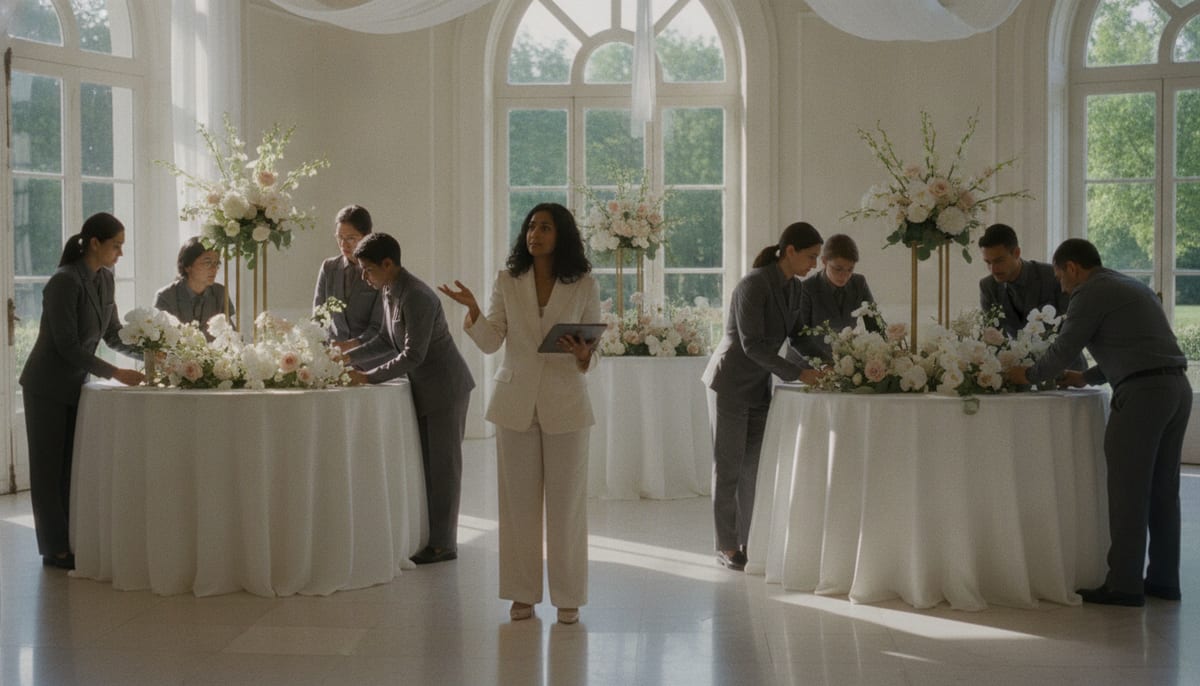
Two hundred guests is the number where events get real. At fifty, you can improvise. At two hundred, every weak point in your plan shows up at once — usually at the door, in the first fifteen minutes. Here's a look behind the scenes at how a large reception stays smooth from the organizer's chair, and the unglamorous decisions that make the difference.
The week before: one source of truth
The organizer's first move isn't decor — it's the guest list. With 200 names, plus-ones and changes come in daily right up to the event. Keeping the list in one live place, instead of emailing new printouts around, means the version at the door is always current. No "let me check the latest copy."
They also decide, clearly, what guests will do: check in, find their table, share photos, sign the guest book. Four outcomes, each one step. Anything vaguer than that turns into confusion at scale.
Two days out: the dry run
The organizer walks the whole thing on their own phone — scans the entrance code, finds a fake guest, uploads a test photo, checks the live wall. This is where they catch the sign that's too small or the code that didn't print dark enough. At 200 guests, a problem you find now is a headache you avoided.
Doors open: the moment of truth
Here's where paper plans die. Two hundred people don't arrive politely spaced out — they come in waves. The organizer's key decision was to let guests check themselves in with a scan rather than funneling everyone past one person with a list. Greeters become helpers, not gatekeepers. There's no line snaking out the door, because there's no single bottleneck.
One friendly person stands near the entrance to help anyone who needs it — usually a few older guests on the first scan. That's the whole staffing plan for the door, and it's enough.
During dinner: the room runs itself
With everyone seated, the organizer barely touches anything. QR cards on every table mean photos flow into the gallery without a single reminder from the front. The live wall on the screen by the dance floor does the marketing for them: guests see photos appear and want theirs up too. The organizer spends this time enjoying the event instead of managing it.
The next morning: what they hand over
The reception ends but the uploads keep coming for a couple of days. The organizer downloads the full gallery — hundreds of sharp photos from every phone in the room — plus the guest-book messages, and sends the hosts a single link. The event is over, but the memories are gathered, safe, and in one place.
The lesson from the chair
Nothing here was fancy. No AV crew, no custom app, no army of staff. The reception felt effortless to 200 guests because the organizer made a few quiet decisions early: keep the list live, let guests act on their own, cover the room with one code, and let a screen do the encouraging. Scale doesn't require complexity. It requires removing the bottlenecks before anyone arrives.
Run a large event without the bottlenecks
Self check-in, a live guest list, one QR code for the whole room, and a live wall that does the encouraging. Set up your event in minutes.