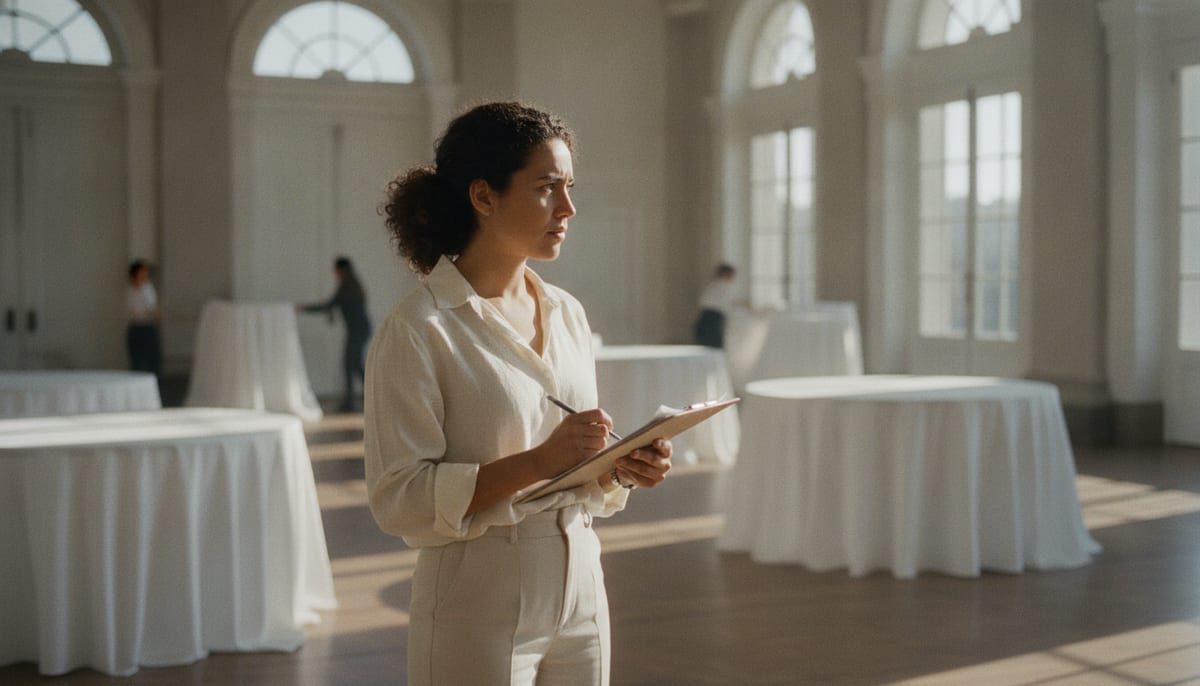
Experienced planners know the truth: an event succeeds or fails in the answers to a handful of unglamorous questions. Not the flowers or the playlist — the logistics of how a real crowd moves through a real space. Here's the framework, organized the way an event actually unfolds.
Before the event
How will guests get in the door without a bottleneck? The arrival window is the highest-pressure moment of any event. Decide now whether one person will read a list or whether guests will check themselves in. If it's a list, plan for two or three greeters at peak; if it's self check-in, test it end to end first.
Is your guest list a living document or a frozen printout? Plus-ones, cancellations, and last-minute additions happen right up to the day. A list you can update in real time saves you from the "they're not on here" conversation at the door.
What do you want guests to actually do? Check in? Find a seat? Share photos? Sign a guest book? Name the two or three outcomes that matter, and make each one a single, obvious step. Every extra tap loses people.
Have you done a full dry run? Walk the guest journey yourself, on your own phone, from the parking lot to the table. You'll catch the confusing sign or the dead QR code while there's still time to fix it.
During the event
Who helps the guests who need it? There's always someone — often an older guest — who needs a hand with the first step. Station one friendly, patient person nearby and the whole room flows.
How do people know what to do? Signage and one clear announcement beat a printed instruction sheet nobody reads. Give your MC a single line: what to scan and why.
Is the experience holding up under load? Two hundred people arriving at once is a different test than a demo with five. Favor tools that let guests act independently so nothing depends on a single staffer or device.
Are the memories being captured as it happens? The best candids happen in the moment and are gone if no one collects them. A shared gallery — or a live wall on a screen — keeps people contributing throughout, not just posing for the photographer.
After the event
How do you collect everything guests created? Photos and messages keep arriving for days. Make sure your collection method stays open afterward, and that you can download it all in one place.
What did you actually learn? Who came? When did the rush hit? Where did people drop off? Real arrival and participation data turns "I think it went well" into something you can plan against next time.
What becomes the keepsake? The gallery, the guest book, the group photo — decide how you'll package and share the memories, and with whom. This is often what guests remember most.
The through-line
Notice the pattern: nearly every question comes down to reducing friction and keeping information live. Events that feel effortless aren't lucky — they're the ones where the planner answered these questions early and chose tools that let guests act on their own.
Run the whole guest journey from one place
Check-in, table lookup, photos, a live wall, and a guest book — one QR code, a live guest list, and real arrival data. Built for planners who sweat the logistics.